01 · Discover
Begin with what your child already knows.
A short, low-pressure pre-assessment reveals secure ideas, unfinished learning and the misconceptions hiding behind an answer.
For families who want mathematics to be more than a workbook or an app. Invite your child to notice patterns, build ideas, test possibilities, make connections and discover that mathematics is something they can explore.
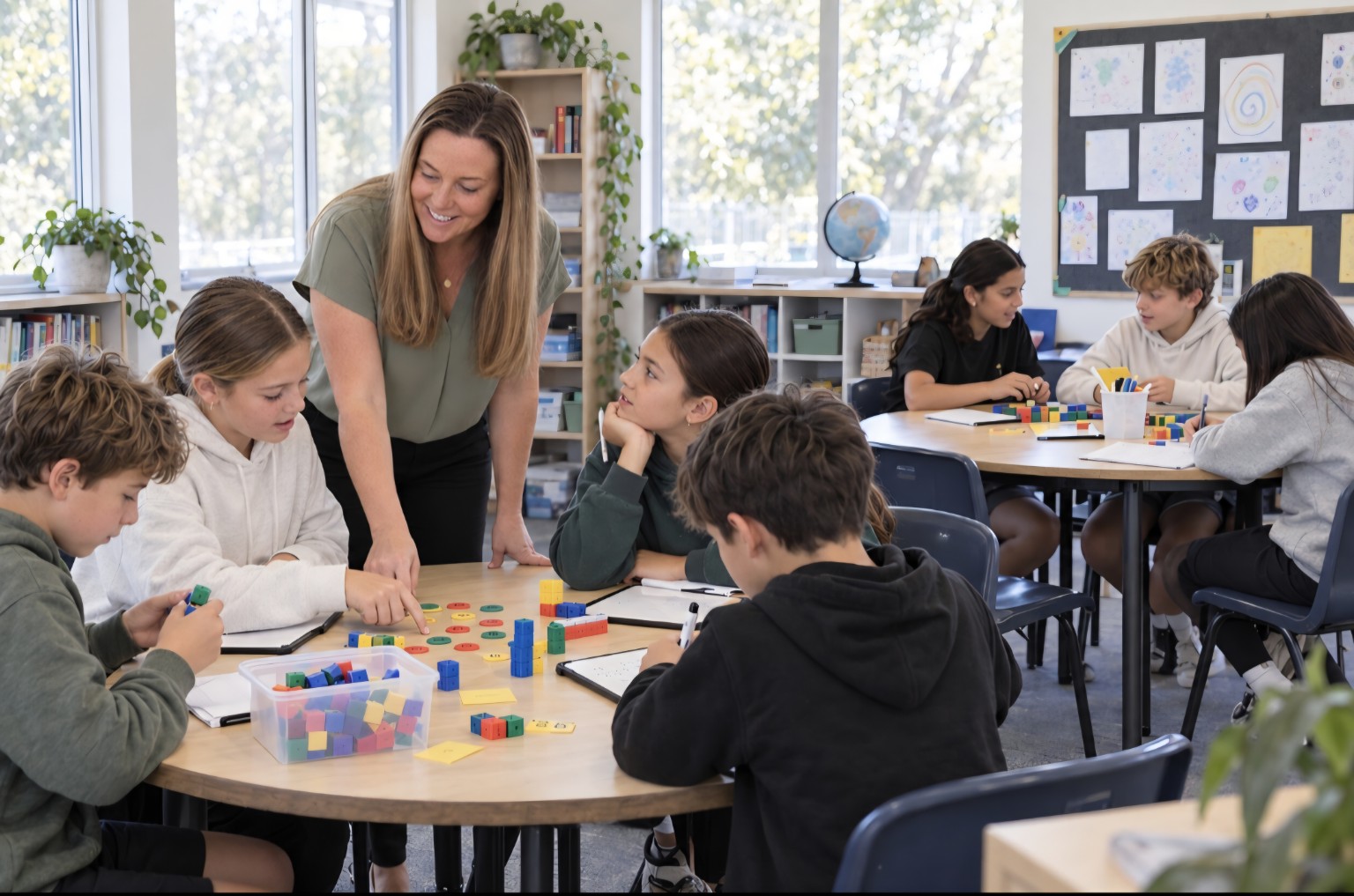
Children deserve time to see why mathematics works, connect it to what they already know and build foundations that last.
The goal is not a child who waits to be shown every step. It is a child who notices, questions, chooses, explains and adapts.
Follow one idea through six connected stages. Each stage tells you something new about your child’s understanding.
A short, low-pressure pre-assessment reveals secure ideas, unfinished learning and the misconceptions hiding behind an answer.
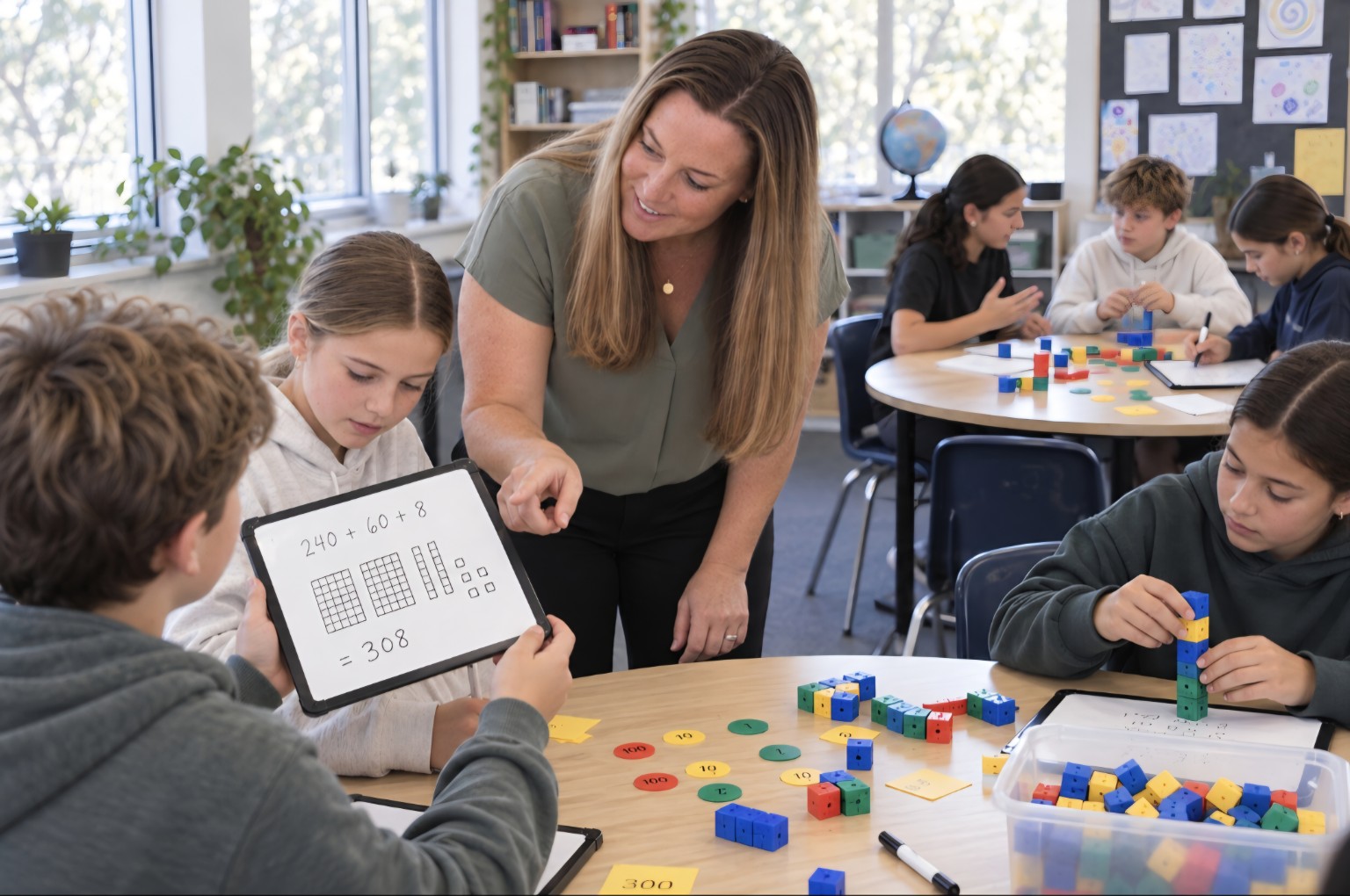
Translate the curriculum into a clear purpose your child can understand: what are we learning, and what will it help us do?
Model the idea with objects, drawings, number lines and language. Connect what children can touch and see to the symbols they will use.

Invite them to build it, draw it, explain it and solve it in more than one way. Their representation reveals the thinking—not just the answer.
Use purposeful dice and card games where winning is decided by chance, not speed. Repetition becomes playful, social and safe.
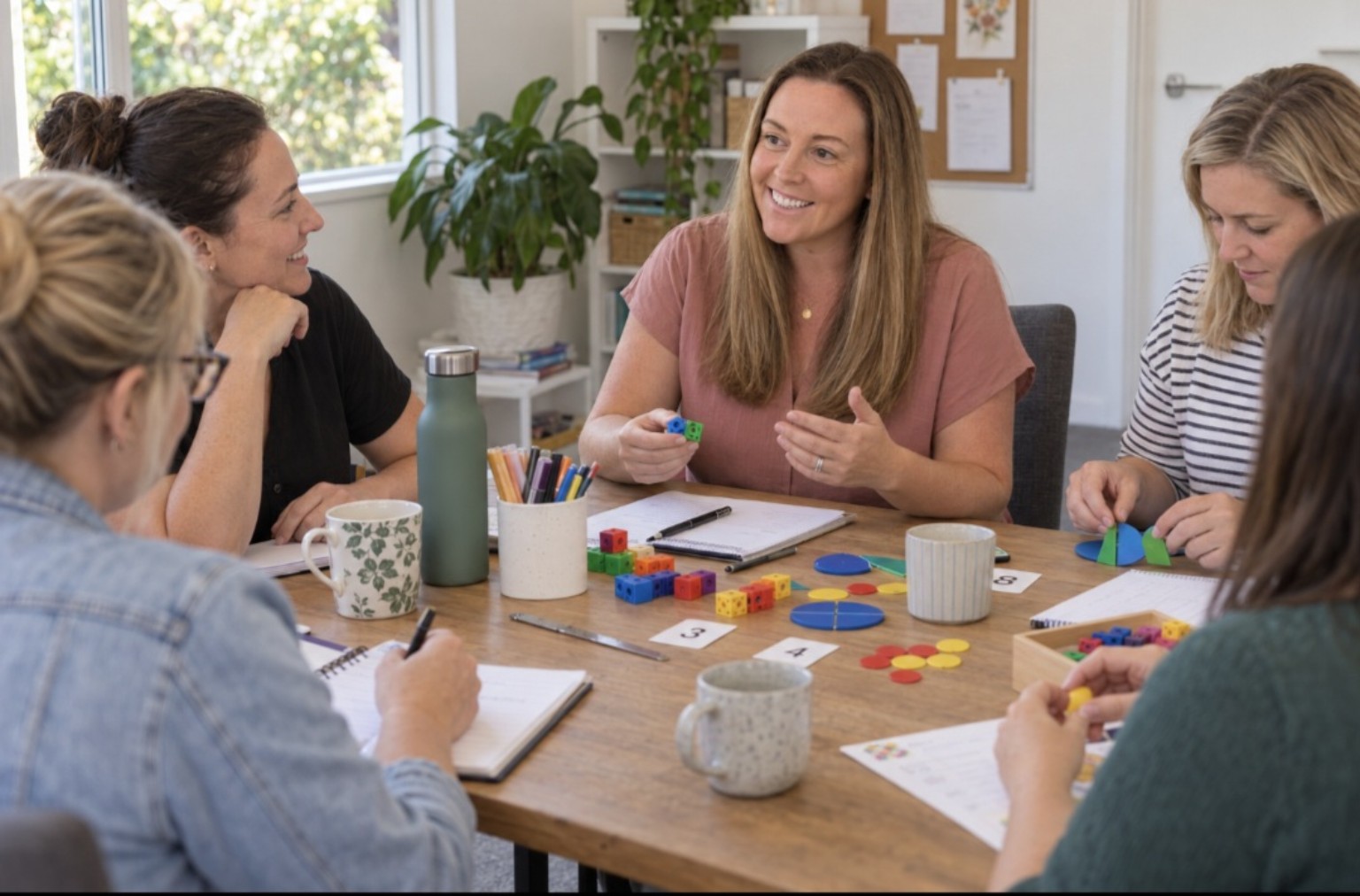
Compare strategies. Investigate a misconception. Make a decision. Apply the idea somewhere unfamiliar. Then revisit the goal and make growth visible.
Not a child who has memorised every answer—a child who knows what to try when the answer is not obvious.
When children see, represent, discuss and apply mathematical ideas, they are building far more than a set of procedures.
Children connect objects, pictures, language and symbols. New learning has something solid to attach to, making it easier to recall and use.
Children learn that being stuck is part of mathematics. They can choose a representation, test a strategy and adjust instead of waiting to be rescued.
Children compare, justify, generalise and apply. They begin to ask “What do I notice?” “Does that always work?” and “Is there another way?”
These findings are useful because they point to teaching actions: connect concrete materials to ideas, secure understanding before racing ahead, use games purposefully and teach children to monitor their own thinking.
Research averages guide good decisions; they are not guarantees for an individual child.
A large meta-analysis found a positive effect when hands-on materials were deliberately connected to abstract mathematical ideas. The object is not the lesson—the connection is.
Read the study ↗The average impact estimated for mastery learning: make the learning goal clear, diagnose gaps and give understanding time to become secure before moving on.
Explore the evidence ↗A mathematics-specific review found a meaningful positive effect from game-based learning. Purposeful games can build practice and engagement together.
Read the study ↗The average impact estimated for metacognition: teaching children to plan an approach, check their progress and explain why a strategy works.
Explore the evidence ↗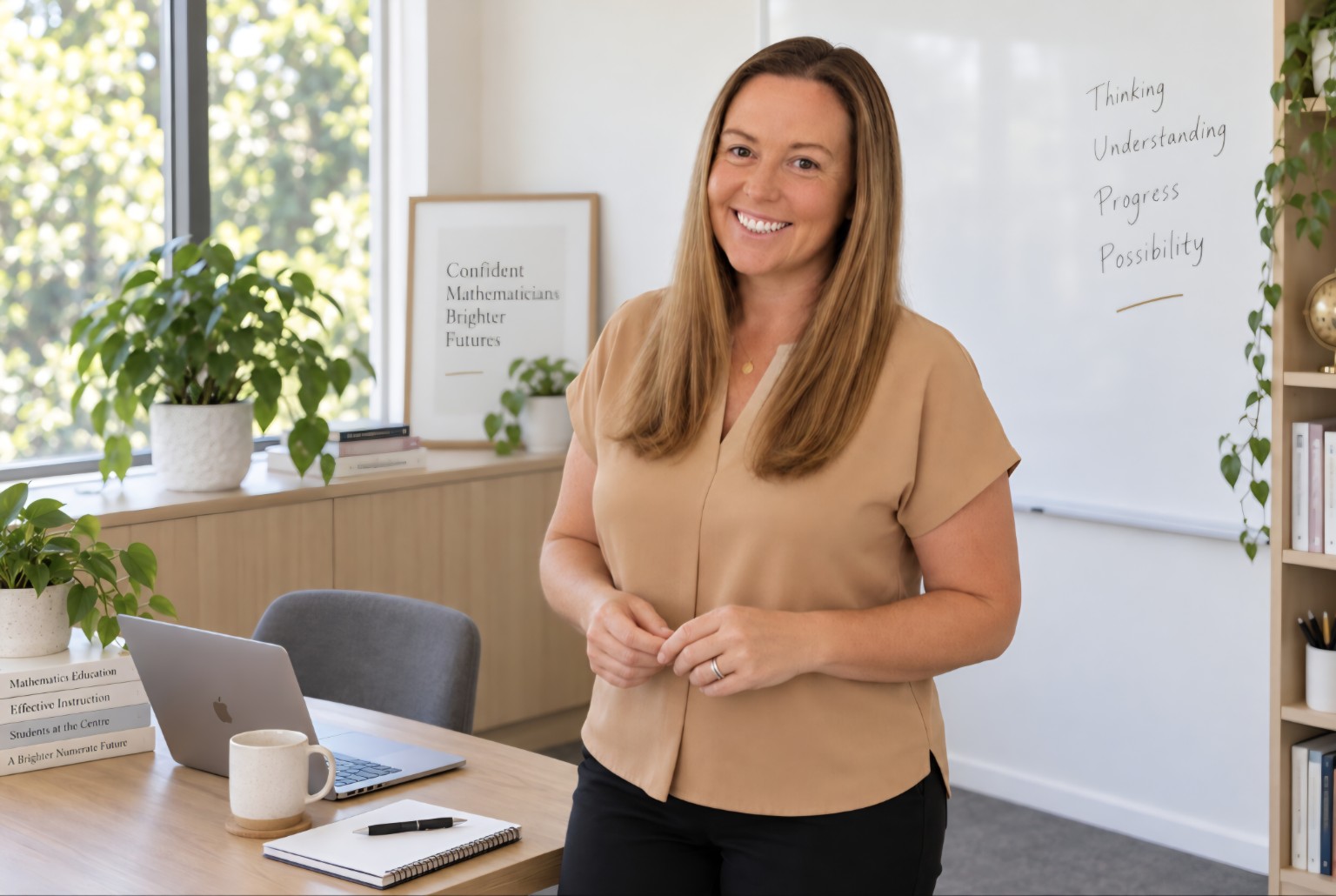
I’m a teacher, curriculum leader, mathematics education specialist and mum. I have spent my career noticing what sits underneath a child’s answer: the idea they understand, the connection they have missed and the question that might unlock the next step.
I have led whole-school mathematics improvement and mentored Kindergarten to Year 6 teachers. Empowered Homeschool Maths brings that professional knowledge into clear, supportive language families can actually use.
You do not need to speak “teacher language” here. Bring what you notice, what worries you and what you have already tried. Questions are welcome.
After you have explored the approach, personal support is available for families who want help turning it into a manageable plan.
A focused 60-minute Zoom session built around your Kindergarten to Year 6 child—not a general chat and not a one-size-fits-all program.
The free planner and visual guide will open once the supporting resources are ready.
Choose a focus, build a balanced sequence and keep the learning manageable.
Join early access ↗Use objects, drawings and whiteboards to make mathematical ideas visible.
Join early access ↗Two whiteboards, coloured markers, cards, 6- and 9-sided dice and base-ten blocks can support years of rich mathematics.
Ask Katrina a question ↗